
Agriculture, Forestry and Fishing
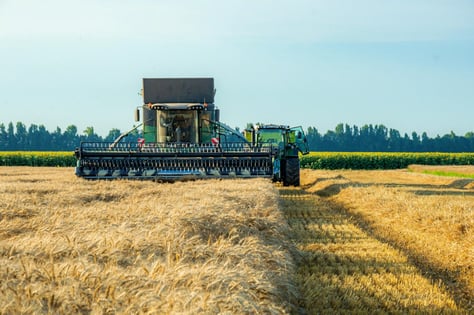
Agricultural businesses often involve developing innovative farming methods, technologies, and environmental solutions to improve productivity across the sector. Here, we explore how R&D applies across the industry and the areas where you’ll find qualifying activity to help you understand if you could be eligible.

Understanding R&D Within Agriculture
R&D for tax purposes is different to how most of us would view R&D. If you've tested new approaches, made modifications, or solved technical problems in uncertain territory, there could be value here for you. Difficult doesn’t necessarily mean R&D. What we are looking for are solving problems where there isn’t a ready-made solution. This creates knowledge where it wasn’t easily accessible, and this knowledge gained is R&D for tax purposes.
The purpose of R&D tax relief is to support businesses trying to improve how things are done whether that’s in the field, the shed, or the workshop. This incorporates agri-tech, food & drink, and renewables, though these industries are typically more aware of their eligibility.
Core Sectors Within Agriculture
The six main industry areas that make up the agriculture sectorExamples of R&D activity in Agriculture:
- Trialling new arable methods
Using new methods or equipment to attempt to improve drainage or soil structure - Experimenting with plant-based proteins
Experimenting with lab-grown ingredients, or biotechnology to develop vegan or allergen-free alternatives to traditional products - Animal Breeding
Developing new breeding methods for resilience or productivity - Agri-Tech
Using sensors, drones, or software in ways that required technical adaptation
- Renewables
Integrating AD, biomass or solar into farm systems with technical challenges - Environmental
Developing new carbon capture or soil carbon enhancement techniques on farmland
What doesn’t count as R&D in agriculture?
- Crop monitoring and quality control
- Maintenance and repairing farm equipment
- Financial planning, business management, and legal work
- Standard regulatory compliance and routine record-keeping
- Aesthetic or cosmetic changes to agricultural products
- Copying existing farming practices
WHAT WE HAVE TO SAY
Our fantastic team of report writers have prepared articles covering the land of tax extensively. If you have a question relating to accounting or tax, it's likely we've already written the answer.
SECTION STEPS - TITLE
Description. Lorem ipsum dolor sit amet, consetetur sadipscing elitr, sed diam nonumy eirmod tempor invidunt ut labore et
SECTION IMAGE SLIDER - TITLE
Description. Lorem ipsum dolor sit amet, consetetur sadipscing elitr, sed diam nonumy eirmod tempor invidunt ut labore et
The Claim Process
We understand the complications that can often arise when completing an R&D claim, not to mention the significant amount of time it can consume, diverting your attention from driving your innovation forward. That's why we have streamlined a transparent and hassle-free process that follows a step-by-step approach from start to finish.
Throughout your R&D claim process, we maintain open lines of communication tailored to your preferences. Once we have compiled comprehensive technical and financial reports, we take the responsibility of submitting them and proactively follow up with HMRC, leading the communication on your behalf. Often, our next contact with you brings the exhilarating news of success and positive outcomes.
Step 1
We'll gain your authorisation via our client instruction form/NDA. This will enable us to discuss your R&D activities along with your current tax position. This will enable us to discuss your R&D activities along with your current tax position.Step 2
We'll analyse the profit & loss (P&L) statement of the business while facilitating your technical call. This step aims to determine whether your case is feasible from both technical and financial perspectives.Step 3
Once our experts are confident that your case meets the R&D eligibility criteria, we will then gather all the required technical information and financial documentation according to HMRC's standards to support your case.Step 4
At this stage, we initiate a stringent compliance procedure that we have developed in-house to audit your R&D claim application. We verify whether it meets the defined standards before submitting it to HMRC to ensure a positive outcome.Step 5
After conducting a comprehensive review of your R&D claim, including all required documentation, the application will be forwarded to HMRC for further processing.Step 6
Our team maintains continuous contact with HMRC regarding your case. If any queries arise, we address them on your behalf using a highly systematic approach to maximise your outcome while minimising any delays in your repayment.
DSIT Guidelines
The DSIT Guidelines form the foundation for compliance when preparing an R&D claim. In conjunction with the wider scope of HMRC’s guidance in relation to R&D Tax Relief, they set out how to determine whether work qualifies and provide practical examples of how to apply the criteria to evidence R&D within a project. These guidelines should not only underpin the assessment process when compiling a claim but can also be referenced during an enquiry defence if required. By demonstrating to HMRC how a project aligns with the definitions and scenarios outlined, you can clearly evidence that the innovation undertaken qualifies for R&D tax relief. Below are five of the guidelines we most frequently rely on to support qualifying work.
HMRC often reference software development examples throughout its guidance.
Drawing direct comparisons to HMRC’s own examples offers a clear and simple way to evidence compliance in R&D projects, whether relating to a single technical detail or an entire scheme.The following pages set out examples drawn directly from HMRC’s published guidance, which we reference where relevant within our reports.
- Reformed Reliefs: Overseas Restrictions
- Technological or Scientific Uncertainties
A company is conducting R&D in the development of a software service for the commercial banking market in the US. Development requires the company to have a collocated team in the US due to access regulations within the US banking sector. This requires conditions (the presence of US banking systems and regulatory requirements) which are not present in the UK, and which would be wholly unreasonable to replicate.
This condition exists in the US. Therefore, this activity would satisfy CTA09/1138A if undertaken in the US, where the necessary conditions arise. Under the new ‘merged’ R&D scheme, overseas costs that used to be claimable may be blocked from a claim and so it’s important to ensure your work remains compliant in the modern R&D landscape.
CIRD152000, Example 5
In determining the relevance of your R&D work, we firstly assess whether the work advances your field of science of technology, however we then need to consider what makes your work technologically or scientifically uncertain. A technological or scientific uncertainty exists when knowledge of whether something is scientifically possible or technologically feasible, or how to achieve it in practice, is not readily deducible or available by a competent professional working in the field as per S.13 DSIT guidelines.
CIRD81960
Managing Enquiries - Case Studies?
The following examples illustrate how investing in R&D can deliver tangible results, especially in complex software projects. They are presented from a tax perspective rather than a technical viewpoint, explaining projects in a way that HMRC will recognise and accept, rather than using traditional industry language. Each study focuses on how the project is described, rather than providing a full breakdown of the DSIT guidelines applied. For further detail, more comprehensive case studies are available on the Wilby Jones website.
Britannia Fire are responsible for the biggest innovation in fire fighting equipment this decade, with their development of a portable, multipurpose fire extinguisher. Managing Director, Andy Spence discusses how partnering with Wilby Jones has helped his business to grow and develop

CONCLUSION
Explore additional solutions for your Life Science project
SECTION CTA - TITLE
Description. Lorem ipsum dolor sit amet, consetetur sadipscing elitr, sed diam nonumy eirmod tempor invidunt ut labore et